The purpose of emergency procedures is to facilitate and organize student, faculty, and staff actions during emergencies.
Emergency plans, notification systems, and proper training will result in fewer injuries and less structural damage to the university during emergencies.
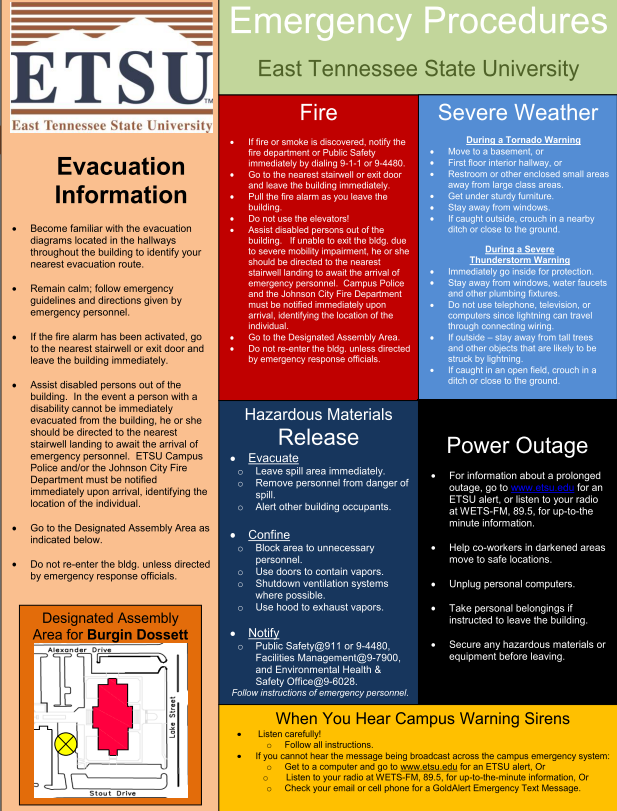
All faculty, staff, and students should familiarize themselves with the university'sgeneral emergency procedures. They are posted in all ETSU buildings. Theseprocedures give students, faculty, and staff specific information about what to doin the event of fire, severe weather, power outages, and hazardous materialreleases. The posting also provides specific procedures to follow for buildingevacuation and response to the campus emergency notification system. Theexample above are posted emergency procedures from Burgin E Dossett Hall.
Faculty Emergency Guide
The importance of emergency preparedness extends into the classroom. Students, even in higher education settings, look to the instructor for guidance and definitive action during an emergency. Faculty and instructors who take a few minutes at the start of each semester to familiarize their students with basic evacuation and emergency procedures will find a peace of mind that they and their students are better prepared for an emergency.
Faculty and instructors are presented with a unique challenge in emergency planning
as they travel between buildings and classrooms delivering lectures and guiding lab
activities. The following information is intended to serve as a quick reference during
emergencies.
Students, even in the university environment, look to the person at the front of the
class as the leader of the group. Even in classes as small as 5 individuals, students
expect the instructor to have answers and a clear plan when an emergency occurs.